Live in Saint-Léonard

A string of semi-detached white-brick duplexes, steep, wide driveways, and broad streets laid out around a park yes, you’re definitely in the east end of Montreal! And yet… Just hear the “ciao”s flying at Café Milano, watch a game of bocce at Luigi-Pirandello Park, or admire the stunning marble tiling of the Leonardo Da Vinci Centre, and you’ll realize you’re also somewhere else in a community where the Italian heart still beats strong.
La vita è bella at Saint-Léonard
Easily accessible via Highways 40 and 25 and soon by three new stations on the Blue metro line Saint-Léonard is bordered to the north and east by Montréal-Nord and Anjou, and to the south and west by the neighbourhoods of Nouveau-Rosemont and Saint-Michel. This warm, family-friendly borough is known for its high quality of life, spacious and affordable housing, well-maintained parks, and social diversity. Many families of Italian origin settled here after the Second World War and have lived in the area for generations.
Today, you’ll find just as many young children as seniors deeply attached to their neighbourhood. And who can blame them? Life is good in Saint-Léonard!
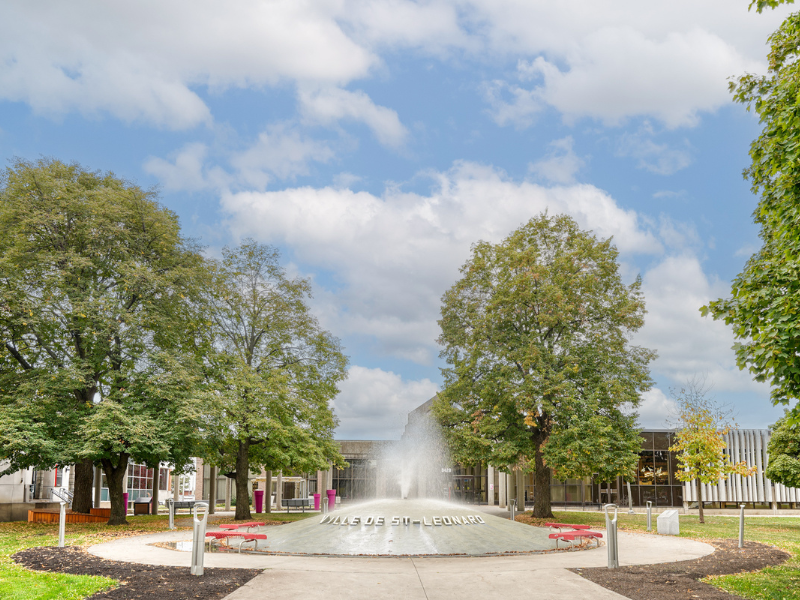
Photo: Alias photographs
Welcome to Montreal’s former garden
Located on the lands of the Côte Saint-Michel, the parish municipality of Saint-Léonard-de-Port-Maurice was established in 1886 and officially became a city on March 5, 1915. At the time, it had around a hundred residents gathered around its parish church. In 1916, it lost part of its territory to a new parish, which would later become the city of Anjou in 1956. Walking along Jarry Street, you can still spot a few heritage landmarks east of Lacordaire Boulevard — including the church, the old presbytery with its roadside cross, and the charming Dagenais house, designated a historic monument in 1981.
For fifty years, life was relatively quiet in this community of farmers. The area’s abundant vegetable and dairy production helped supply the nearby young metropolis, earning Saint-Léonard the nickname “the garden of Montreal.”
Then, everything changed in the 1950s. Housing projects multiplied, urbanization intensified, and the population skyrocketed: from 925 residents in 1956 to over 52,000 by 1971. Three main factors explain this spectacular boom: the migration of Montrealers eastward in search of suburban life, the massive arrival of Italian immigrants, and the opening of the eastern section of Highway 40 in 1966. Renamed Saint-Léonard in 1962, the city adopted an urban development plan to shape its territory, guide its growth, and modernize. In 2002, Saint-Léonard was merged into the City of Montréal to become the borough we know today.
Who is Saint Leonard of Port Maurice?Born Paul Jérôme Casanova on December 20, 1676, in Porto Maurizio near Genoa, Saint Leonard of Port Maurice was a Franciscan priest and religious known for his spiritual writings. He was beatified in 1796 by Pope Pius VI and canonized in 1869 by Pope Pius IX. The parish municipality established in 1886 was named Saint-Léonard-de-Port-Maurice in his honor. |
Retro Bungalows and Leonardo-Style Duplexes
Like in the Anjou borough, the former farmlands of Saint-Léonard were quickly snapped up by developers during the real estate boom of the 1950s, 60s, and 70s, giving rise to a brand-new, “American-style” suburb.
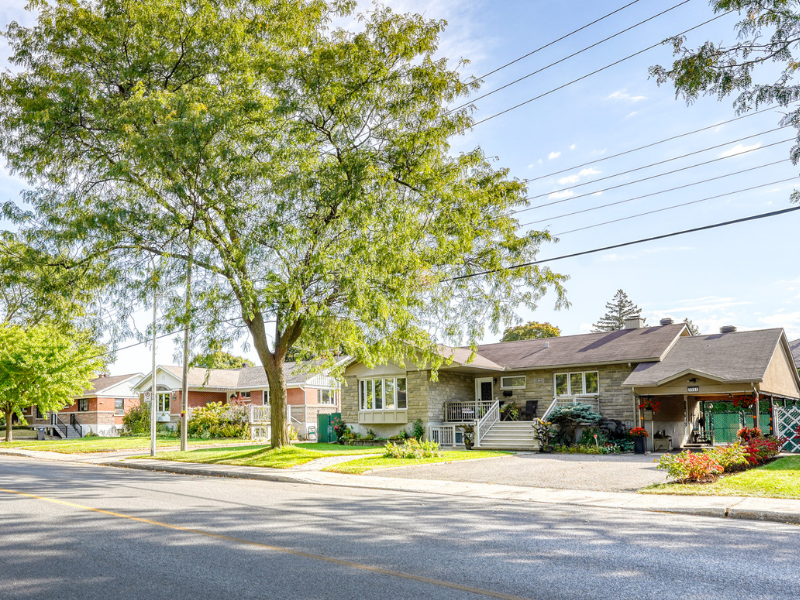
Photo: Alias photographs - 5560, Bd Couture, Montréal
The first construction project, launched in 1956 to address Montreal’s housing crisis, was initiated by the Montréal Housing Cooperative. They built 655 single-family homes east of Lacordaire Boulevard, between Lavoisier Boulevard and Jarry Street. At the time, this was the largest cooperative housing project in Quebec. These charming bungalows feature a highly sought-after mid-century modern style. To admire them, simply explore the area surrounding Robert Boulevard.
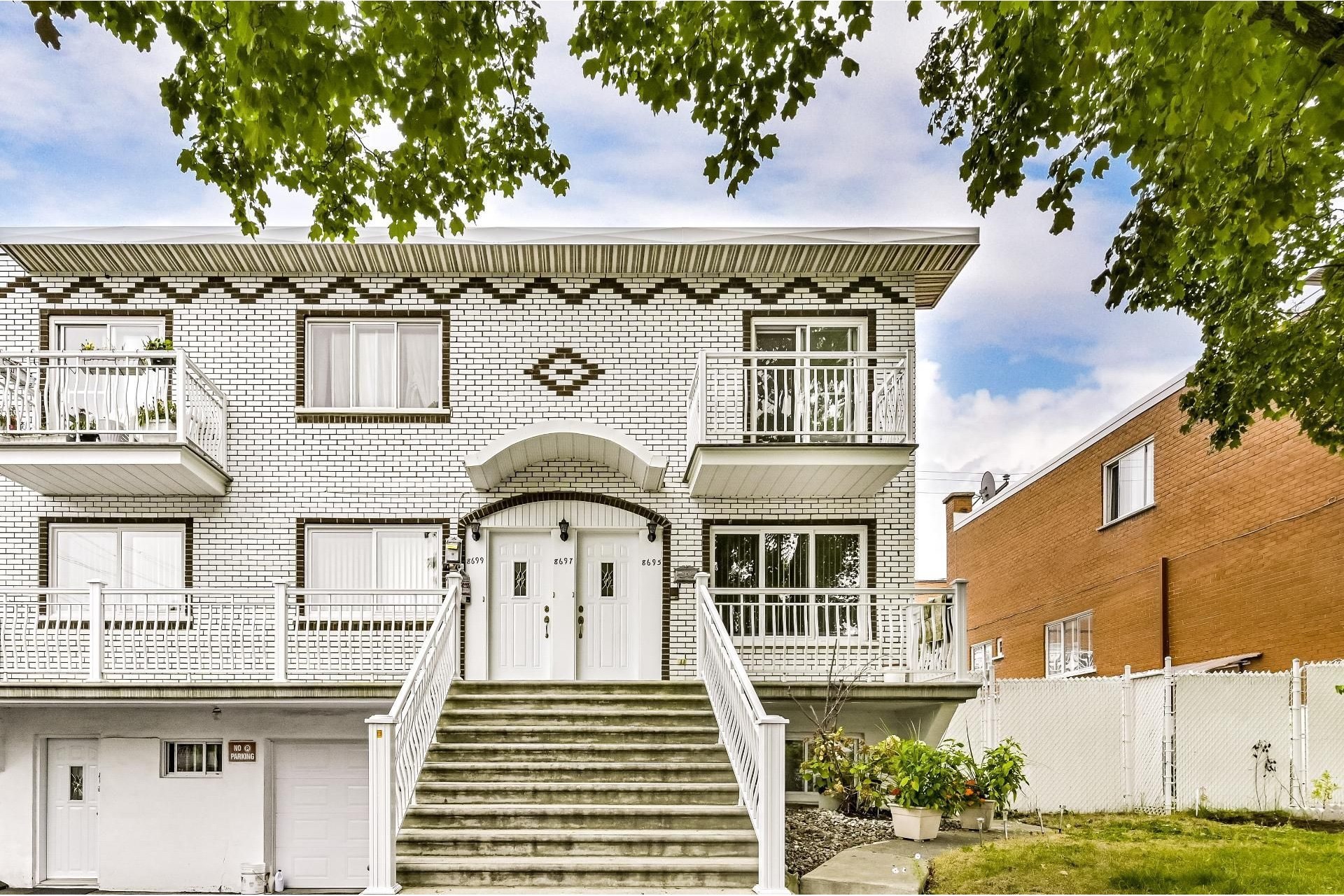
Photo: Lux Image Solutions - 8697 street du Maréchal-Ney,
But it must be admitted, the true stars of Saint-Léonard are undeniably the white-brick semi-detached duplexes. Built mostly by Italian contractors, they feature an architectural signature that evokes a Mediterranean lifestyle, where light colors, abundant natural light, and beautiful tilework take center stage.
Unlike Montreal triplexes, these wide two-storey buildings all include an integrated garage with a private parking space at the front, a spacious vestibule, bright living areas, and very often a basement kitchen opening onto a garden or vegetable patch perfect for family meals.
Neighborhood life here doesn’t happen in back alleys, since there are none, but rather in backyards, cafés, and parks. Such is life in Saint-Léonard.
Who will your neighbors be?
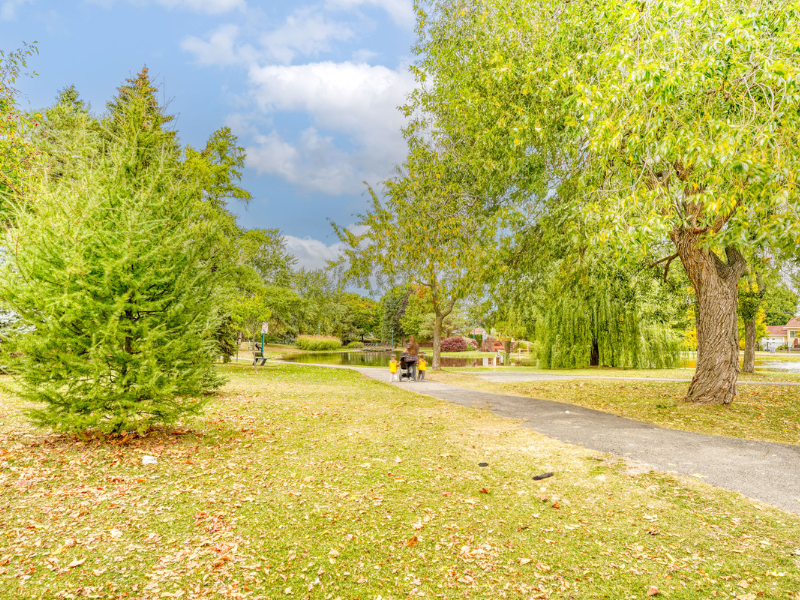
Photo: Alias photographs - Wilfrid‑Bastien Park
According to the electoral district profile published in 2025 by the Borough of Saint-Léonard, there is a high likelihood that your neighbors are immigrants or Canadians born to immigrant parents, as nearly eight out of ten residents are directly or indirectly from immigrant backgrounds. In 2021, the immigrant population mainly originated from Algeria (22.5%), Italy (20.6%), Haiti (11.7%), and Morocco (11.1%).
Half of the approximately 80,000 residents of the borough are able to hold a conversation in both French and English, although French remains the language most commonly spoken at home. English, Italian, Arabic, and Spanish are also among the most frequently used home languages.
The proportion of children under the age of 15 and seniors is higher than elsewhere in Montréal, with each group representing 20% of the population. In 2021, the borough counted 4,510 single-parent families and 16,160 people living as couples (78.2% of the population).
Residents of Saint-Léonard are well educated: 30% of individuals aged 25 to 64 hold a university degree, while 19% have completed college-level studies. Most residents are renters, with only 35% being homeowners. The median annual household income was $80,700 in 2021.
What to Do in Saint-Léonard
If you’re feeling adventurous, dive into the damp darkness of the famous Saint-Léonard cave, located in the heart of Pie-XII Park. Nicknamed the “Fairy Hole,” this remarkable natural cave, carved into limestone, is over 15,000 years old. Guided tours, led by spelunking experts, take place during the summer.
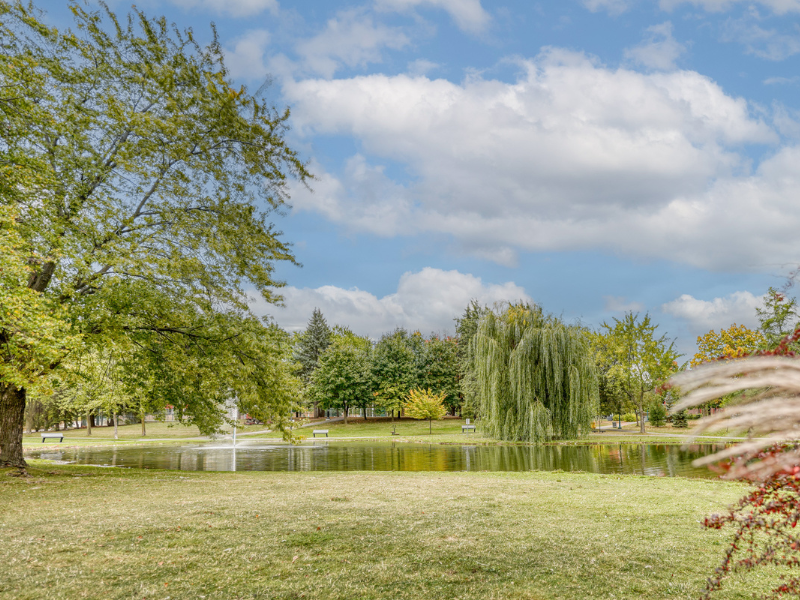
Photo: Alias Photographs - The pond at Wilfrid‑Bastien Park
Then, take a long stroll through Wilfrid-Bastien Park along Lacordaire Boulevard. You’ll find everything you need to relax or have fun: tennis courts, a large pond, playgrounds, picnic areas, and an outdoor amphitheater. The park buzzes with activities and cultural events, including the citizen’s Festival, which draws thousands each summer.

Photo: Alias Photographs - Wilfrid-Bastien Park
Ladauversière Park offers a family-friendly atmosphere with basketball courts, play structures, splash pads, and even an outdoor pool perfect for cooling off during the summer months. It’s a true gathering place for neighborhood residents.

Photo: Alias Photographs - The Martin Brodeur Arena
The borough hall, the library, the Martin Brodeur Arena, the aquatic complex, and the Leonardo Da Vinci Centre for many residents, this centre is the community and cultural heart of the borough. Whether summer or winter, you can enjoy the indoor pool, take cooking or fitness classes, attend a show in one of its two beautiful halls, or simply have a coffee there.
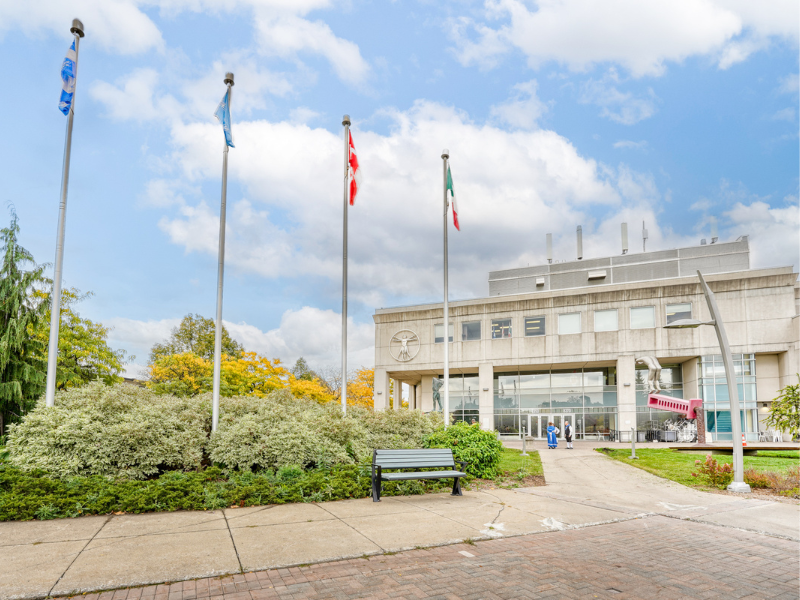
Photo: Alias photographs - The Leonardo Da Vinci Center
A Few Delicious Spots
Founded by Matteo Paranzino, Café Milano is a must-visit: since 1971, it’s known for serving the best coffee in the area. You can gather on its large terrace to enjoy a panini or watch soccer matches on the TVs inside. On Viau Boulevard, stop by the family-run Del Sole bakery and pastry shop to stock up on Italian cakes, pagnottas (round breads), or Sicilian pizzas. Craving cannolis? Head over to Pâtisserie Alati on Jean-Talon Street, which also offers delicious cakes. For wood-fired pizza followed by tasty gelato, visit La Bella Italiana restaurant. And to really get a feel for the neighborhood, sit down at Bistro Pizzeria Gallo Nero inside the Leonardo Da Vinci Centre.
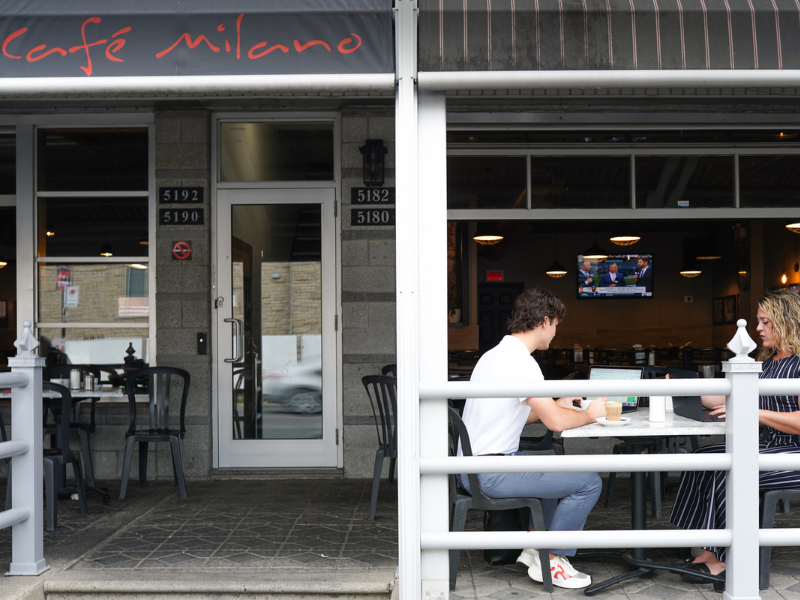
Photo: Alias photographs - Café Milano
A festive occasion? Les Délices Lafrenaie offer stunning custom cakes that are just as beautiful as they are delicious. On Jarry Street, it is impossible to miss Jarry Smoked Meat, a neighborhood institution since 1974, where you can enjoy one of the city’s best smoked meats. On the same street, discover Du Boucher à la Table, a must-visit gourmet address in Saint-Léonard, where the butcher’s craft meets the dining table. In a warm and welcoming atmosphere, the restaurant serves dishes centered on high-quality meats from AAA beef to impressive ribs alongside Italian specialties such as pasta and seafood
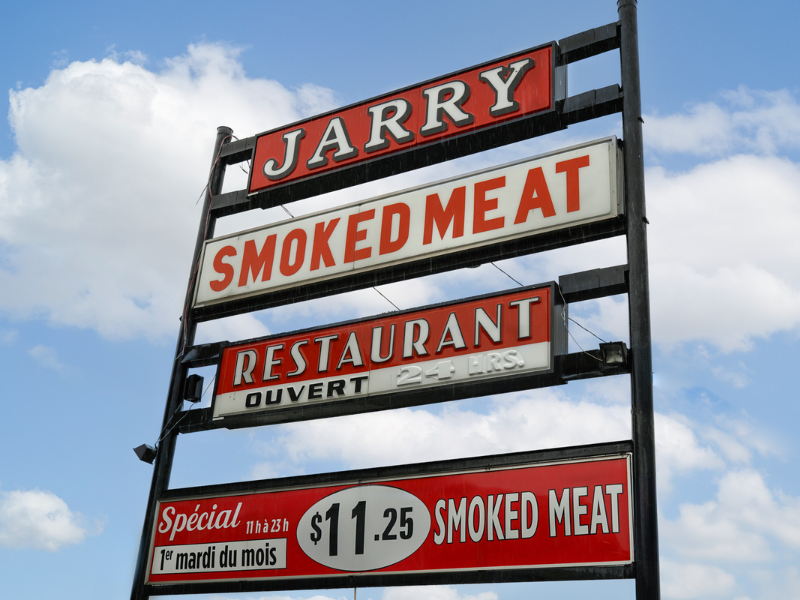
Photo: Alias photographs - Jarry Smoked Meat
Other exotic flavors are also celebrated in the borough: on Jean-Talon Street and Jarry, you’ll now find Moroccan, Turkish, Colombian, Japanese, and Vietnamese restaurants waiting to be discovered!
The real estate market
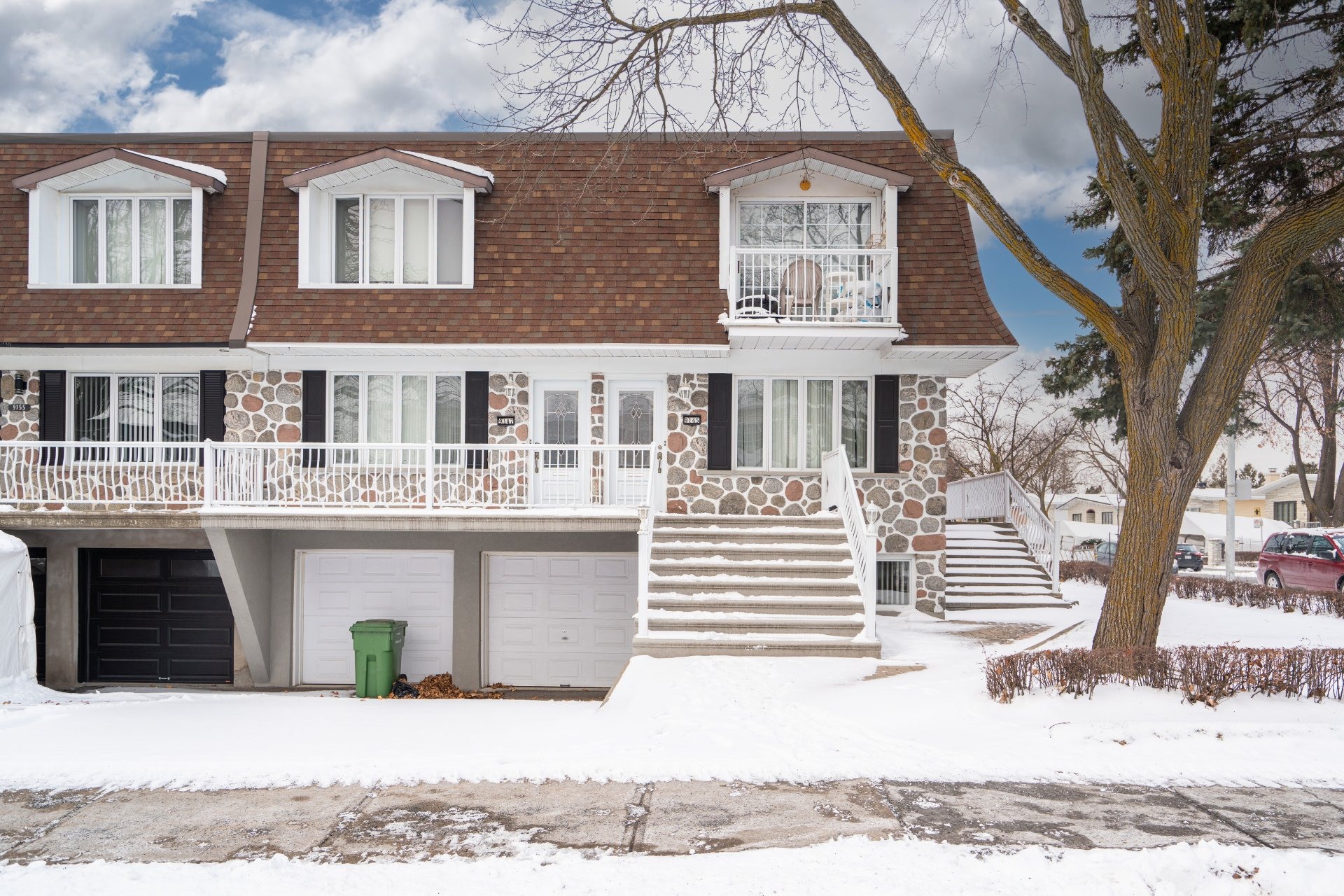
Photo: Alias photographs
The real estate market in Saint-Léonard remains stable and highly sought after, particularly by families and investors. As a well-established residential neighborhood, it offers a strong quality of life thanks to its proximity to schools, shops, and major roadways, while remaining slightly more affordable than some of Montreal’s central areas.
In recent years, the arrival of newly built condo developments has brought a sense of modernity to the neighborhood. These projects feature contemporary architecture, thoughtfully designed units, and shared spaces suited to today’s lifestyle. They attract a new demographic, including young professionals and first-time buyers, while also diversifying the local housing market.
In summary, Saint-Léonard combines stability, accessibility, and urban renewal. New developments are helping modernize the area’s real estate landscape while strengthening its long-term appeal.
Subscribe to our monthly market reports and stay up to date with the latest trends!
Local services
Main Shops and Services
Jean-Talon street
The main commercial artery of the borough, Jean-Talon Street, is home to more than 270 shops and service businesses. With the extension of the Blue Metro Line, it is expected to become, within a few years, the long-awaited downtown area for Saint-Léonard residents.
Langelier boulevard
Many shops and shopping centers can be found along Langelier Boulevard, both north and south of Highway 40.
Marché aux puces métropolitain
This huge market features over 700 stalls where you can find clothing, shoes, jewelry, beauty products, toys, electronics, appliances, and a food court.
Community Services
- Saint-Léonard Library, which includes a garden library (jardinathèque) and a makerspace (fabricathèque)↗
- Paul-Maurice Gallery↗
- Wilfrid-Bastien Park Pavilion, home to several non-profit organizations↗
- Leonardo Da Vinci Centre↗
- Saint-Léonard Eco-District↗
Health Care
- Saint-Léonard CLSC (Local Community Service Centre)
- 8 medical clinics
- 19 dental centers
- Nearby hospitals: Maisonneuve-Rosemont Hospital, Montreal Heart Institute, Santa Cabrini Hospital
Community Organizations
- Saint-Léonard Youth Centre
- Early Childhood Coalition of Saint-Léonard
- Saint-Léonard Senior Assistance Network Centre
- Saint-Léonard Youth Collective
- Saint-Léonard Women’s Centre
- Family House
- Canadian Italian Community Foundation
- National Congress of Italian-Canadians of Quebec
- Italian-Canadian Community Services of Quebec
- Association Office for Diversity and Reintegration
- Saint-Léonard Community Economic Development Corporation (CDEC)
- Jean-Talon Business Improvement District (SDC)
More informations : Borough organizations directory
Educational institutions
- 10 primary schools
- 2 secondary schools, and several specialized schools.
Childcare
- 4 Early Childhood Centres (CPE)
- 15 daycare centers
Sports and Recreational Facilities
- 2 arenas and 5 outdoor ice rinks
- 1 aquatic complex, 5 outdoor pools, 2 outdoor wading pools, 6 splash pads
- 1 sports complex
- 9 large parks and 8 small parks, multiple tennis, soccer, volleyball, and bocce courts, 1 skate park, and 2 community gardens
Public Transit
In the coming years, three new metro stations will be built along Jean-Talon Street as part of the Blue Line extension eastward: Vertières, Mary-Two-Axe-Earley, Césira-Parisotto, Madeleine-Parent et Anjou stations. at the intersections of Viau, Lacordaire, and Langelier."
Several bus lines serve the borough, especially on Jean-Talon and Jarry Streets, and on Grandes-Prairies, Couture, Viau, Lacordaire, and Langelier Boulevards.
Highways and Bridges
- Highway 40 crosses the south of the borough, and Highway 25 borders it to the east.
- Access to Route 138 via Sherbrooke Street and Route 125 via Pie-IX Boulevard to the west.
- Access to the Louis-Hippolyte-Lafontaine Tunnel and the Olivier-Charbonneau Bridge via Highway 25.
Nearby
- Galeries d’Anjou Shopping Centre
- Place Versailles Mall
- Montreal Botanical Garden
- Santa Cabrini Hospital
- Montreal Heart Institute
- Maisonneuve-Rosemont Hospital
Last updated: janvier
Moving to Saint-Léonard Vous pensez déménager dans Saint-Léonard ? Avec ses rues commerçantes, ses espaces verts et ses nombreux plex, cet arrondissement est très populaire auprès des familles, nouveaux-arrivants et communautés culturelles. Allons l'explorer ensemble. Que ce soit pour acheter une maison ou un condo dans Saint-Léonard, notre équipe immobilière peut vous aider. Appelez-nous au 514 388-9333 ou laissez-nous vos coordonnées ci-dessous et allons découvrir le quartier ensemble. |
